






Psychological safety has the power to make or break team success – yet in many workplaces, employees still hesitate to share concerns, question decisions, or admit mistakes.
When people fear judgment, punishment, or career consequences, valuable ideas remain unspoken, risks go unnoticed, and small problems can grow into major crises. A lack of psychological safety can also lead to disengagement, unhealthy communication patterns, and weakened trust across teams.
This e-book explores the role leaders play in creating psychologically safe workplaces and offers practical actions for building a culture of openness, learning, empathy, and accountability.
This e-book was created by Insights, DEVELOR’s strategic partner.
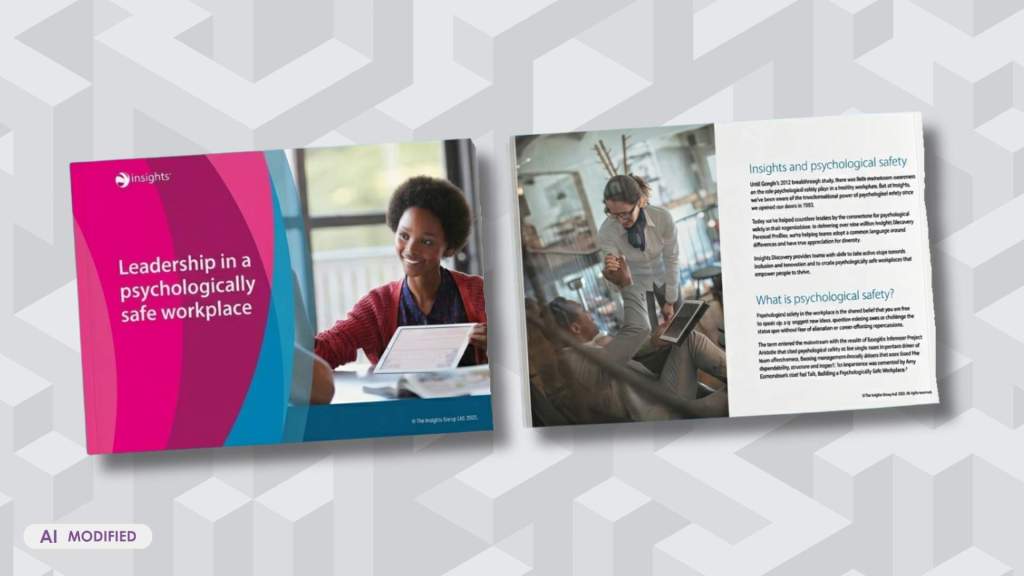
Who is the “Leadership in a psychologically safe workplace” e-book for?
- Leaders who want employees to speak up more openly and confidently.
- Managers seeking to build trust, engagement, and stronger team relationships.
- HR and L&D professionals supporting leadership, culture, and inclusion initiatives.
- Senior leaders responsible for innovation, performance, and organizational risk.
- Employees who want to contribute to a more open and respectful workplace.
What’s inside?
- A clear explanation of psychological safety in the workplace.
- The reasons employees may hesitate to share ideas, concerns, or mistakes.
- The organizational and financial consequences of employee silence.
- How psychological safety manifests in everyday workplace behavior.
- The relationship between psychological safety, innovation, and team effectiveness.
- Six practical actions leaders can take to create a safer environment.
- Guidance for employees who want to support psychological safety themselves.
- Practical approaches to feedback, difficult conversations, and learning from mistakes.
- The role of self-awareness, empathy, and other-awareness in building trust.