






Empathy is not a soft leadership extra. It is a powerful capability that helps leaders build trust, strengthen engagement, and create healthier, more inclusive workplaces.
Today’s leaders are navigating uncertainty, growing employee expectations, workplace stress, and constant pressure to maintain performance. In this environment, people need more than direction and decisions. They need leaders who can understand their perspectives, recognize their individual needs, and respond with genuine care.
Empathetic leadership does not mean avoiding difficult conversations or lowering standards. It means combining strength with compassion, listening without judgment, and creating the conditions in which people feel safe, valued, and able to perform at their best.
This e-book was created by Insights, DEVELOR’s strategic partner.
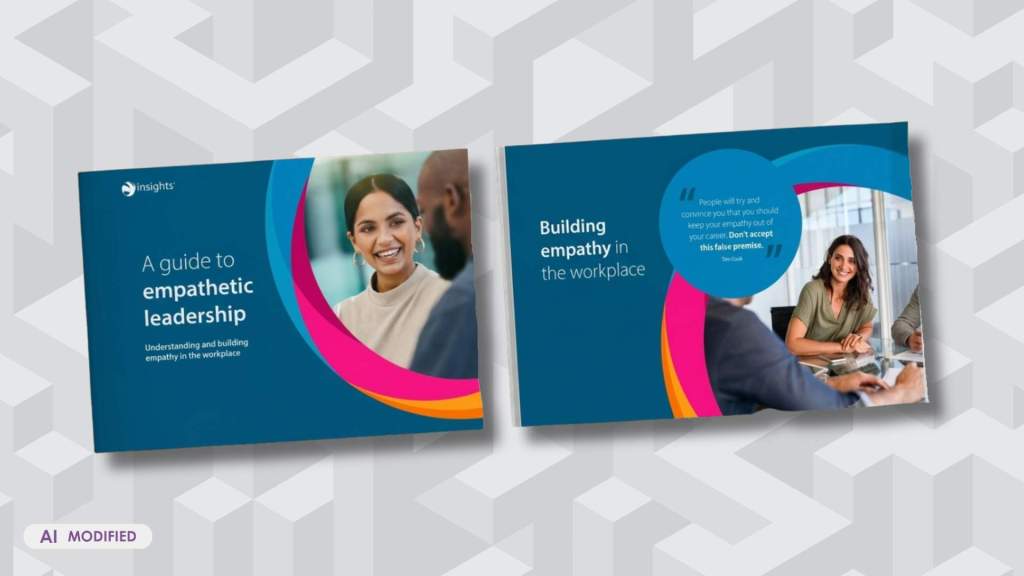
Who is the “A guide to empathetic leadership” e-book for?
- Leaders who want to build stronger and more trusting relationships with their teams.
- Managers looking to improve employee engagement, well-being, and performance.
- HR and L&D professionals developing people-centered leadership cultures.
- Senior leaders who want to strengthen inclusion and psychological safety.
- Anyone interested in understanding and practicing empathy more effectively at work.
What’s inside?
- A clear explanation of what empathy is and how it differs from sympathy.
- The role of empathetic leadership in today’s workplace.
- The key traits demonstrated by empathetic leaders.
- The relationship between empathy, engagement, performance, and employee retention.
- The risks of empathy distress and unconscious bias.
- How empathy contributes to inclusion, innovation, and psychological safety.
- Why empathetic leadership can reduce reactivity and workplace stress.
- Five practical ways to nurture empathy across an organization.